
Divination tools are ways we communicate with our higher self, subconscious, or spirit guides. They’re not fortune-telling gimmicks...they’re mirrors that help us see clearly what’s already moving within us.
In this article, I’ll share seven forms of divination I use in my own practice, why they work, and how you can begin exploring them.

What Are Divination Tools?
Tarot cards, oracle decks, pendulums, astrology charts, rune casting, tea leaves, palmistry, automatic writing, meditation, dreams… these are all forms of divination.
The dictionary defines divination as “the practice of seeking knowledge of the future or the unknown by supernatural means.” But in practice, divination is less about predicting the future and more about shedding light on your current energy so you can move forward with clarity.
Because everything is energy, almost anything can become a divination tool. The key is intention: what you ask, how you listen, and how open you are to the message.
How to Choose the Right Divination Tool
With so many tools available, how do you know where to start?
- Follow your pull. What excites you? If you feel drawn to a pendulum more than a deck of cards, honor that. Curiosity is a sign.
- Match your need. If you want detailed reflection, tarot or oracle may be best. If you want quick yes/no clarity, pendulums are simple. If you want deep self-connection, meditation or dreams may call you.
- Experiment. Tools work best with practice. Try different ones, notice which feels most natural, and let your practice evolve.
1. Oracle cards
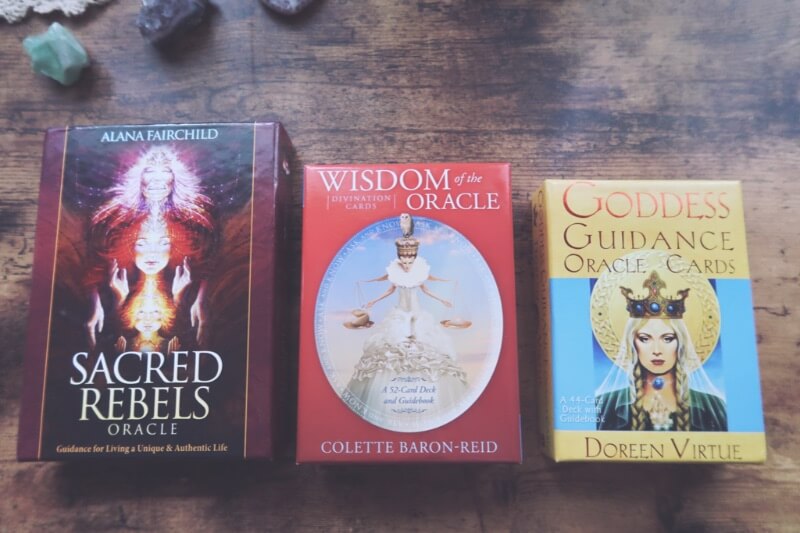
I choose a deck I feel drawn to, hold it in my hands, and silently set an intention: show me what I most need to know right now.
After pulling a card, I read the description and study the imagery, using my intuition to sense what message is being mirrored back.
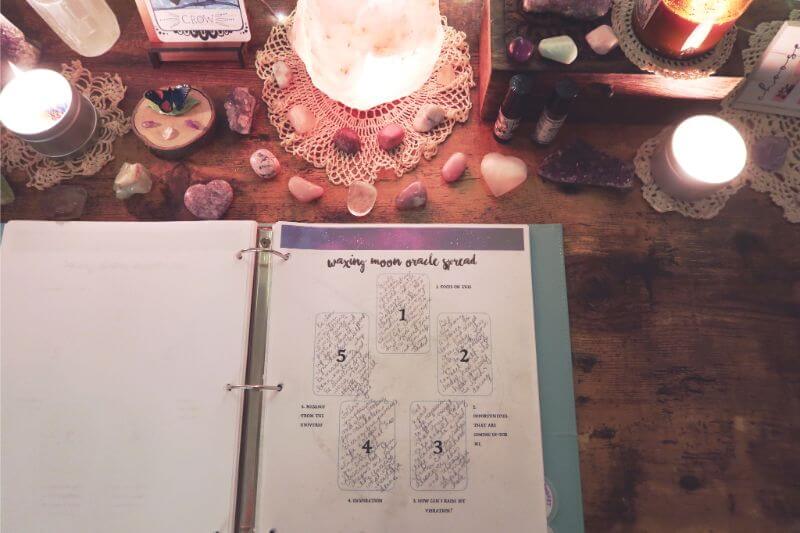
Oracle cards are one of my favorite ways to instantly connect with higher guidance. I’ve also had powerful results using card spreads from my Moon Ritual Bundle, which align pulls with lunar cycles.
2. Pendulum
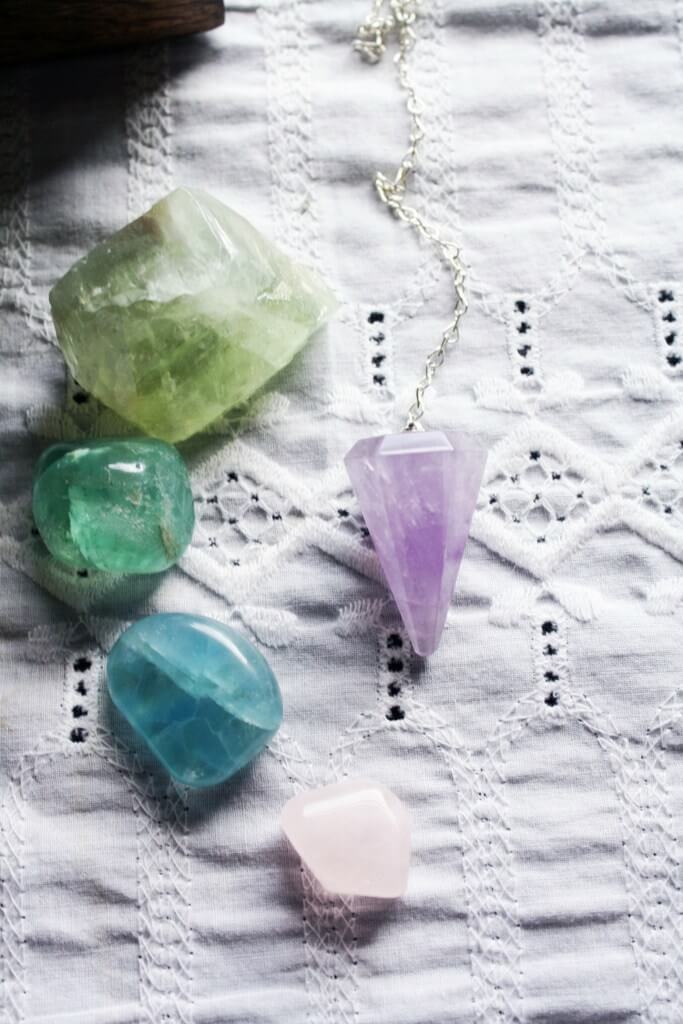
A pendulum is a simple but effective tool for yes/no clarity. I’ve used mine to locate energetic blockages in the body and to check in with my subconscious when my mind felt tangled.
Tip: the pendulum works best when you’re not emotionally charged about the outcome. Ask neutral questions, or use it as a complement to another tool (like confirming an oracle pull).
For deeper body-based pendulum work, I recommend The Emotion Code by Dr. Bradley Nelson.
3. Automatic writing
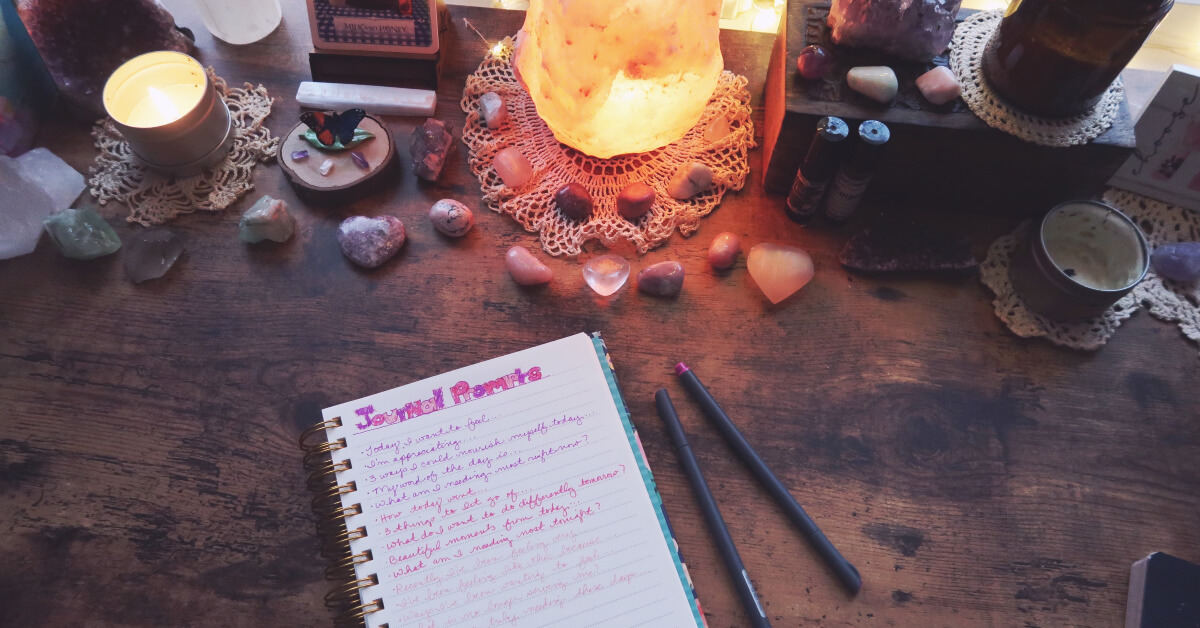
Automatic writing is like opening a direct channel to your higher self. I often start by writing out what I’m struggling with. Then I keep writing, without censoring or editing, until answers begin to surface.
What flows onto the page often surprises me. Insights I hadn’t considered come through clearly once I get past my thinking mind. Automatic writing is also one of my favorite ways to release mental clutter.
4. Astrology
Astrology is a symbolic map of energy. I use my natal chart to understand the lessons my soul came here to learn and the patterns I’m working through.
It’s not about fixed destiny but about recognizing the lenses you were born with.
I’ve learned a lot by reading various astrology books, using the TimePassages app, and conducting extensive Google searches. Astrology is a lifelong study, but even the basics can be profoundly affirming.
5. Meditation
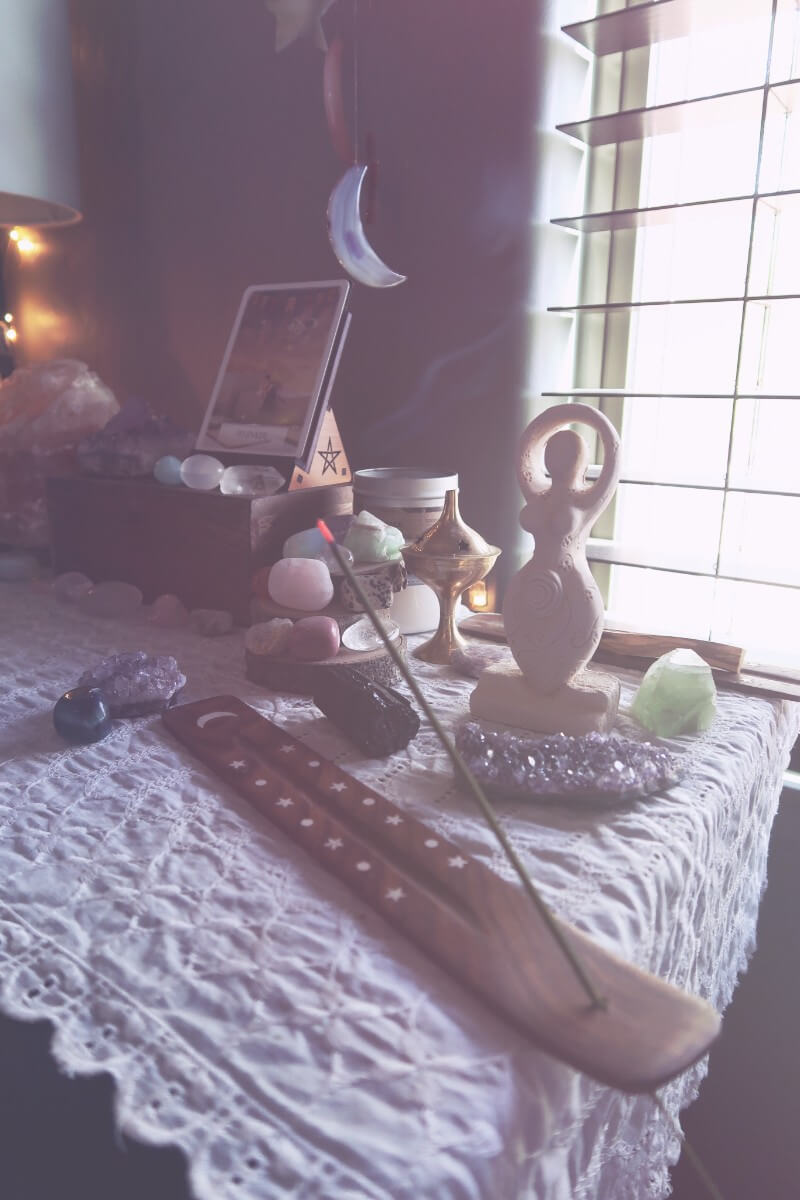
Meditation itself is a divination tool. When you reach the threshold between waking and sleep, visions and impressions often arise that speak directly to your current path.
For me, meditation has opened the door to guidance from higher aspects of myself and from energies beyond the physical plane. If you want to go deeper, books on astral projection and altered states can give you new techniques for exploring this space.
This book was very helpful for me in learning how to get into deeper meditative states that have allowed me to have very beautiful and insightful experiences.
6. Dreams

Dreams are one of the oldest forms of divination. I keep a dream journal by my bed, jotting down even fragments. Over time, patterns emerge.
I decode dreams symbolically: every person, place, or object is a reflection of me. For example, in one dream my grandmother’s basement represented my subconscious. The water pouring down its walls reflected emotions spilling over.
Dreams offer feedback, messages, and even visions of the near future. You can also set intention before sleep: Show me what I most need to know that I don't know how to ask for.
7. Intuition
At the heart of all divination is intuition. Signs, synchronicities, sensations...they’re all part of your inner guidance system.
That “coincidental” song that makes you think of a loved one? Not a coincidence. That flicker in your gut when you meet someone new? Not random.
The more you practice honoring intuition, the clearer it gets. Divination tools don’t replace your intuition; they just train you to trust it.
In conclusion
Reality is far larger than what our five senses show us. Divination tools open doors into that larger reality, reminding us that we are never disconnected from guidance.
Whether you choose cards, pendulums, writing, dreams, or astrology, the point isn’t the tool itself: it’s the dialogue it opens with your higher knowing.
If you’re curious, start small. Follow what calls you. Let the practice teach you.
✨ Want to go deeper? Each month inside The Dwell in Magic School, we explore themes like thresholds, elements, divination, and dreams through long-form teachings, rituals, and journaling. Come join us if you’re ready to expand your practice.
To receive my weekly, self-care focused email that inspires you to go deeper inside the magic that is you, sign up for the Self-Care Sunday emails.
With love,
Jessica

- How Self-Care Sets the Frequency for Everything You Manifest This Year - January 13, 2026
- Magnetism vs Hustle: What True Manifestation Feels Like - July 26, 2025
- Oracle Cards vs Tarot Cards: Understanding the Key Differences - March 11, 2025



Comments
No Comments